By Muhyideen Jimoh
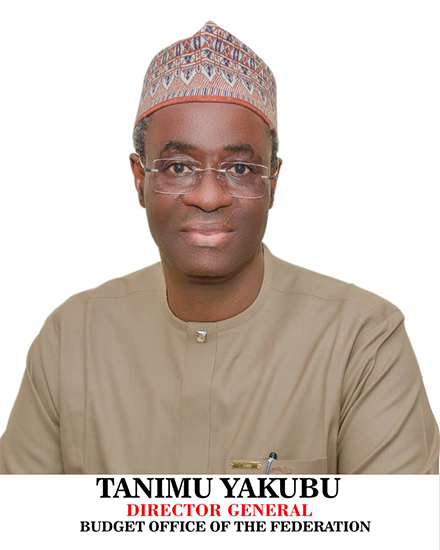
Abuja, Jan. 4, 2026 (NAN) — The Director-General of the Budget Office of the Federation, Mr. Tanimu Yakubu, has issued a robust defense of President Bola Tinubu’s economic reform agenda, popularly termed ‘Tinubunomics,’ stating its objectives were never to deliver “instant abundance” but to execute a foundational structural reset of Nigeria’s economy.
In a detailed statement titled ‘Tinubunomics and the Arithmetic of Illusion,’ released on Sunday in Abuja, Yakubu argued that widespread public criticism of the reforms is often based on a fundamental misunderstanding of public finance principles, which he labeled “misleading arithmetic” rather than sound economic analysis.
“A striking feature of Nigeria’s current economic debate is the enthusiasm with which huge numbers are circulated — and the casualness with which they are assembled,” Yakubu stated. “This is not an economic analysis. It is an arithmetic illusion.”
Deconstructing the “Arithmetic of Illusion”
Yakubu’s core argument centers on clarifying critical distinctions routinely blurred in public discourse. He emphasized these are not mere technicalities but the very “foundation of public finance”:
- Revenue vs. Cash vs. Financing: He explained that not all government inflows are equal. Borrowing, for instance, is not income but financing that creates future debt obligations. Similarly, federation-wide revenue collections (from taxes, oil, customs) are shared between the federal, state, and local governments and are not a singular federal spending pool.
- The Myth of the ‘Subsidy Savings’ Windfall: A key point of public contention has been the perceived cash savings from fuel subsidy removal. Yakubu clarified that this reform “does not conjure idle cash. It closes a hole.” The fiscal benefit, he argued, manifests gradually through reduced budget deficits, improved fiscal discipline, and the ability to redirect spending to targeted support programs, not as a sudden, spendable lump sum.
- Understanding Debt Dynamics: He addressed the alarming rise in Nigeria’s naira-denominated debt stock, clarifying that a significant portion results from the exchange-rate revaluation of existing dollar-denominated debts. “When the exchange rate adjusts, the naira value of dollar-denominated debt rises automatically. Treating this accounting effect as new borrowing is a category error,” he said.
The True Aims and Constraints of Tinubunomics
Yakubu framed Tinubunomics as a necessary but painful “macro-fiscal reset” undertaken within severe inherited constraints, including massive debt service burdens, obligatory security spending, legacy arrears, and constitutional fiscal obligations to other tiers of government.
“Tinubunomics was never a promise of instant abundance,” he reiterated. “It is a structural reset aimed at restoring price signals, strengthening revenue administration, rebuilding fiscal credibility, and repricing the public balance sheet while protecting the most vulnerable.”
This suggests the reforms prioritize long-term stability—such as allowing the Naira to find a market-driven value and improving tax collection—over short-term populist spending, even at the cost of initial hardship and inflation.
A Call for Nuanced Accountability
The Budget Office DG concluded by outlining what he considers the proper framework for holding the government accountable, moving beyond viral social media figures.
“Accountability does not begin with social media arithmetic. It starts with audit logic,” he asserted. Proper scrutiny, he advised, should focus on:
1. Federal Retained Revenue: The actual share available to the federal government after statutory distributions.
2. Financing Sources: The breakdown between debt and other financing.
3. Expenditure Composition: How funds are allocated across sectors like infrastructure, defense, and social welfare.
4. Measurable Outcomes: Tangible results in areas like GDP growth, power generation, or agricultural output, rather than just input figures.
Yakubu’s statement represents a significant effort by a top fiscal official to shift the public debate from sensationalized headline numbers to the complex realities of macroeconomic management, setting the stage for a more informed, albeit challenging, national conversation on Nigeria’s economic future. (NAN) (www.nannews.ng)
MUYI/KTO
==========
Edited by Kamal Tayo Oropo