

In a significant political realignment in Imo State, Hon. Ikenga Ugochinyere, the federal lawmaker representing Ideato North and South Constituency, has formally defected from the opposition Peoples Democratic Party (PDP) to the Action Peoples Party (APP). The move, announced at a large rally in Akokwa on Wednesday, January 7, 2026, underscores the deepening fractures within Nigeria’s major political parties and highlights the intensely personal nature of political conflicts at the state level.
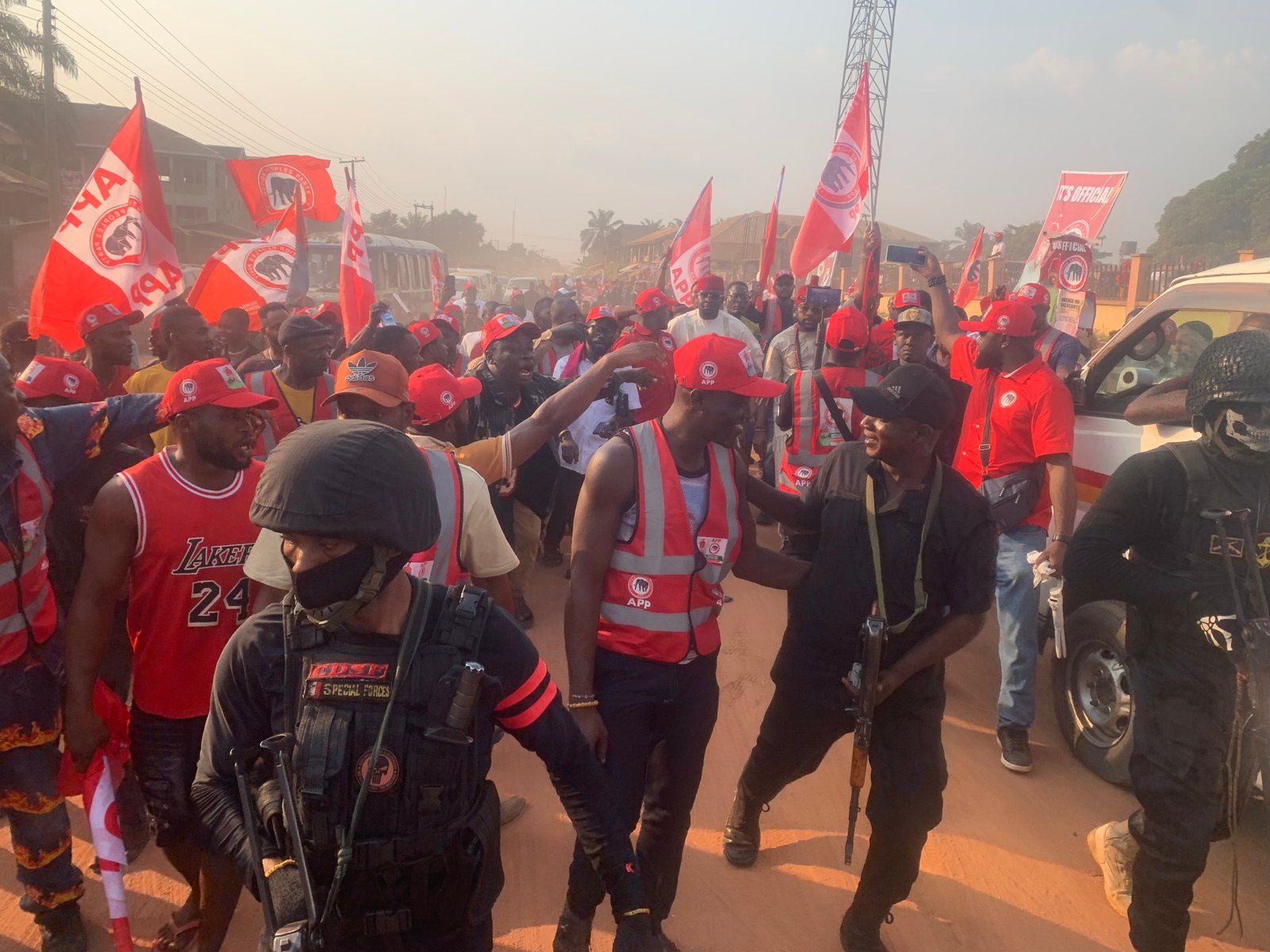
Picture shows supporters of Rep. Ikenga Ugochinyere at the rally in Akokwa, Imo, where he announced his defection from the PDP to the APP.
A Defection Rooted in Prolonged Conflict
Ugochinyere’s departure from the PDP is not a simple case of political opportunism but the culmination of a protracted and bitter feud. In his address to supporters, he cited “irreconcilable differences” with the party’s national leadership, framing his exit as a forced departure from a hostile environment. “From day one we started with PDP till this afternoon, we are still in court,” he stated, revealing a political career that has been legally contested from its inception.
The lawmaker detailed a chronology of grievances, beginning with his disqualification from party primaries—a common tactic used by party establishments to sideline perceived rebels or inconvenient candidates. This was followed, he claimed, by the party itself seeking a court order to declare his hard-won seat vacant, an extraordinary move that signals an irreparable breakdown in the relationship between a legislator and his party platform.
Allegations of Violence and Institutional Abandonment
Beyond internal party machinations, Ugochinyere painted a picture of physical danger and institutional failure. He alleged that the PDP failed to support him during “periods of intense political hostility,” including the destruction of his billboards, the arrest of his supporters, and even assassination attempts. Most strikingly, he referenced a specific attack on January 13, 2023, for which he claims to have provided evidence to security agencies with no resultant prosecution.
“We have faced both internal and external enemies,” he noted, accusing the party of turning a deaf ear to his warnings about these dangers. This narrative transforms his defection from a mere political calculation into an act of survival, seeking refuge in a party he described as a “stable platform.” His claim of facing 28 “trumped-up charges” further suggests a coordinated effort using state and judicial apparatus to pressure him.
The APP: A Sanctuary or a Springboard?
Ugochinyere’s praise for the APP—calling it the only stable platform in Nigeria today—is a significant endorsement for a party outside the traditional PDP-APC duopoly. He described it as a “party that rewards hard work with electoral victory and a party that defends the sanctity of the ballot box at all cost.” This language implicitly criticizes the PDP’s internal democracy and hints at the APP’s potential role as a vessel for aggrieved politicians from larger parties, particularly in the volatile South-East political landscape.
The presence and speech of the APP’s governorship aspirant, Mr. Chima Amadi, who praised Ugochinyere’s “courage,” confirms that the defection is part of a broader strategy to build the party’s relevance in Imo State ahead of future elections. Amadi’s call for voter registration to “regain the state” positions the APP as a serious opposition force.
Broader Political Ramifications and a Warning to Wike
The defection rally also served as a stage for broader political commentary. Ugochinyere issued a direct warning to the Federal Capital Territory Minister, Nyesom Wike, a former PDP heavyweight now in the ruling APC, advising him to retract steps that could “destroy his career.” He specifically cautioned Wike against “talking down” on the President-General of Ohaneze Ndigbo, the apex Igbo socio-cultural organization, calling it a “red line.”
This intervention is highly symbolic. It positions Ugochinyere as a defender of Igbo dignity in the national political conversation and directly appeals to President Bola Tinubu to enforce “political decorum.” It also illustrates how defection events are used to recalibrate a politician’s national profile and alliances.
Threats of International Intervention and Calls for Security Action
Escalating his rhetoric, Ugochinyere vowed to seek international intervention regarding alleged “atrocities and human rights abuses” in Imo State. By referencing Venezuela and appreciating international democracy advocacy, he is attempting to frame local political violence within a global context of democratic backsliding, potentially to attract attention from foreign embassies and human rights organizations.
His concurrent call for the Inspector-General of Police and security chiefs to focus on Imo is a classic political tactic: appealing to federal security institutions over the heads of perceived hostile state actors, while publicly documenting his appeals for protection.
Solidarity and the Future of Opposition Politics
The attendance of PDP Board of Trustees member, Mr. Rufus Omeire, “in solidarity with Ikenga,” is a telling detail. It suggests that Ugochinyere’s grievances may resonate with a faction within the PDP, potentially foreshadowing further defections or internal rebellion. Omeire’s call for opposition unity against the ruling All Progressives Congress (APC) in the state hints at the possibility of an APP-led coalition, transforming this personal defection into a catalyst for wider opposition realignment.
Analysis: Hon. Ikenga Ugochinyere’s defection is more than a party switch; it is a case study in the personalization of political conflict in Nigeria. It highlights the use of legal disqualifications, court challenges, and even allegations of violence as tools for intra-party control. His move to the APP tests whether smaller parties can become viable havens for high-profile politicians locked out of mainstream party structures. The event also reflects the ongoing fragmentation of the PDP’s national cohesion and the increasingly complex, multi-party landscape emerging in states like Imo. The coming months will reveal whether this defection is an isolated survival move or the first crack in a significant political realignment in the South-East.
Reported by Peter Okolie. Edited by Maureen Ojinaka. (NAN)


