By Patience Aliyu
Jos, Jan. 9, 2026
In a compelling appeal for international cooperation, Plateau State Governor, Caleb Mutfwang, has positioned human capital development as the central pillar for the state’s future, calling for robust global partnerships to tackle deep-seated socio-economic challenges.
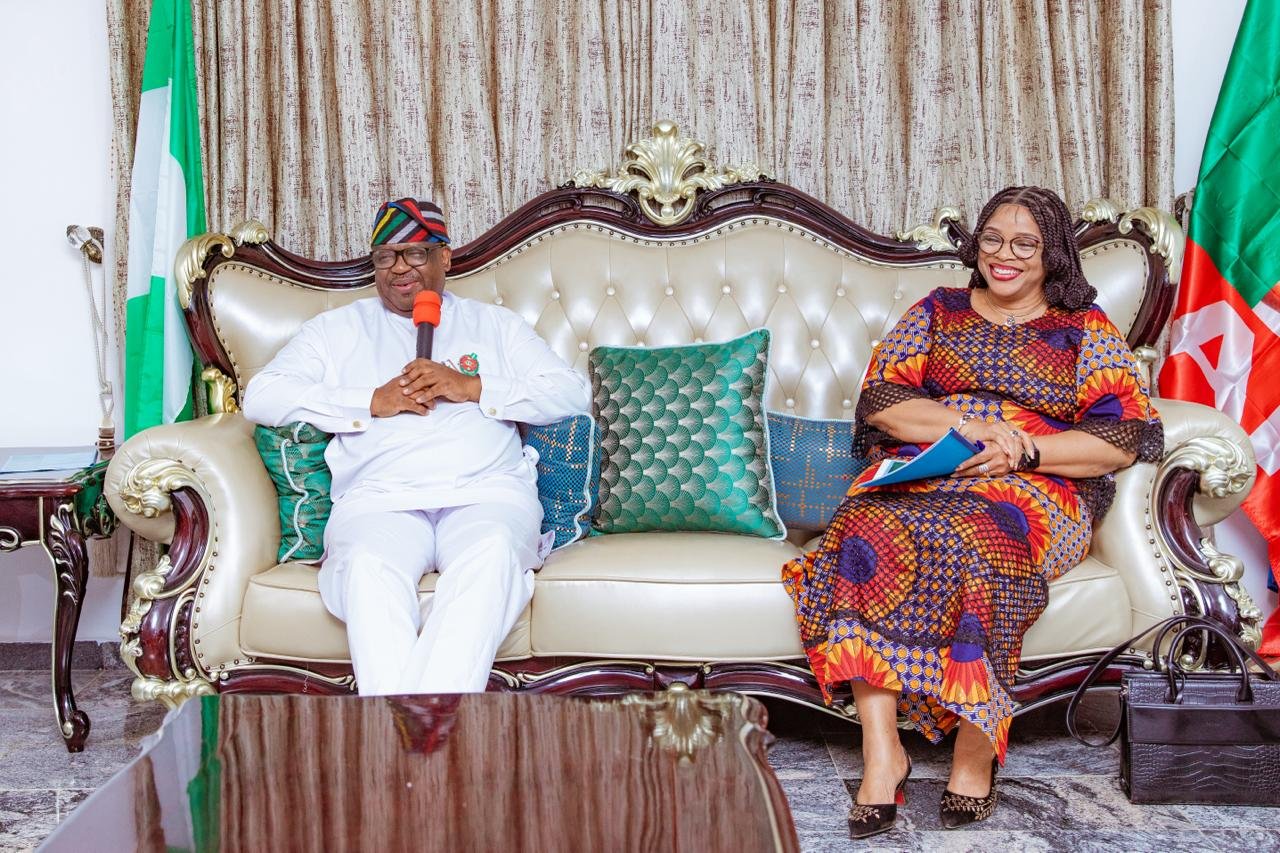
Governor Mutfwang made the declaration during a meeting in Jos with a delegation led by Dr. Nosa Tukura, National President of the United States Government Exchange Alumni Association of Nigeria (USGEAAN). He framed the issue not merely as a local concern, but as a strategic imperative with implications for regional stability and global competitiveness.
The Transformative Power of Exchange
Drawing from profound personal experience, Governor Mutfwang championed educational and professional exchange programmes as catalysts for transformative leadership. “International exposure is not a luxury; it is a critical component in shaping visionary leadership capacity,” he stated. “The paradigm shift in my own perception of governance and public service was directly forged through such exchanges. They provide a comparative lens, exposing participants to global best practices in policy, innovation, and civic engagement that can be adapted to local contexts.” This insight underscores a growing recognition among sub-national leaders that isolation is a barrier to progress in an interconnected world.
Confronting a Dual Crisis: Education and Social Decay
The governor’s call for partnership is driven by urgent, on-the-ground realities. He highlighted a disturbing trend of declining school enrolment in mining communities, where the immediate economic lure of artisanal mining is overpowering the long-term value of education. This exodus from classrooms creates a vulnerable, unskilled youth population.
More alarmingly, Mutfwang disclosed that recent enforcement operations had uncovered underage girls involved in prostitution, with some already entangled in substance abuse. “These are not isolated social ills,” he warned. “They represent a systemic failure and pose a compounded threat—eroding our social fabric while becoming a potential tinderbox for insecurity. Addressing this requires more than government action; it demands a coordinated social movement.” This stark assessment frames human capital development as a holistic endeavor encompassing education, child protection, mental health, and economic opportunity.
Bridging the Technological Chasm
Governor Mutfwang further identified a dangerous widening gap between the rapid pace of global technological advancement and the static nature of local learning environments. “Our education system requires a fundamental upgrade to remain relevant,” he asserted. “We risk producing graduates who are equipped for the past, not the future.” This speaks to the need for partnerships that go beyond traditional scholarship programs to include curriculum co-development, digital literacy initiatives, teacher training in STEM fields, and infrastructure support for tech-enabled learning.
A Strategic Appeal for Nigeria-U.S. Collaboration
Elevating the discussion, the governor positioned Nigeria’s internal stability as a vital interest for global peace. “A stable, prosperous Nigeria is a cornerstone for regional and global security,” Mutfwang noted, making a strategic case for deepened Nigeria-United States collaboration. He argued that investments in human capital in states like Plateau are investments in mitigating root causes of instability—poverty, inequality, and disillusionment—thereby yielding mutual benefits for both nations.
An Offer of Collaboration
In her remarks, Dr. Nosa Tukura commended Governor Mutfwang’s commitment and highlighted the historic nature of Plateau State producing USGEAAN’s first national president as evidence of the state’s latent potential. She presented a concrete pathway for partnership, calling for collaboration to design and implement an empowerment initiative targeting 1,000 youths, with a special focus on women and girls. This proposal directly addresses the governor’s concerns by aiming to provide skills, mentorship, and alternatives to the vulnerable demographics he identified.
The meeting in Jos transcends a routine diplomatic engagement. It represents a clear-eyed diagnosis of Plateau State’s human capital crisis and a strategic blueprint for addressing it through international synergy. The success of this sought-after partnership will depend on translating these dialogues into sustainable, locally-led programs that rescue children from exploitation, rewire education for the 21st century, and unlock the productive potential of Plateau’s youth.
Source: NAN News