
Leadership
By Habibu Harisu
Sokoto, Jan. 9, 2026
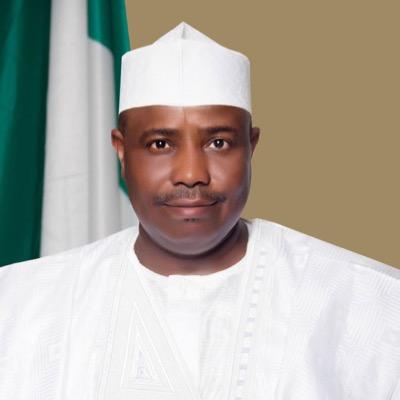
In a powerful reflection on Nigeria’s trajectory, Senator Aminu Tambuwal has issued a clarion call for a fundamental shift in the nation’s leadership paradigm. Speaking after a special prayer marking his 60th birthday in Sokoto, the former two-term Governor and Speaker of the House of Representatives argued that overcoming Nigeria’s deepening political and social challenges hinges on two pillars: empowering a new generation of leaders and restoring a culture of selfless, inclusive governance.
Tambuwal, a key figure in the Peoples Democratic Party (PDP), framed his message not just as political commentary, but as a necessary prescription for national survival. “Nigeria remains a great country with enormous potential,” he stated, “but it is a potential that remains largely untapped. What we require is a new wave of leadership that sees service, not power, as its primary objective.”
Investing in Human Capital: The Imperative of Youth Empowerment
Central to Tambuwal’s vision is an unwavering focus on human capital development. He posited that nation-building is impossible without deliberate, sustained investment in the youth. “Our focus was on growing the youth, investing in their education, healthcare, and future,” he said, referencing his gubernatorial tenure. “This must be the heart of public policy. It goes beyond creating jobs; it is about identifying talented young people early, moulding their character, and providing hands-on mentorship to prepare them for the immense responsibility of leadership.”
This call for youth leadership is a direct response to a global context where younger leaders are increasingly driving innovation and policy. Tambuwal’s argument suggests that Nigeria’s complex, tech-savvy, and interconnected challenges demand the agility, fresh perspectives, and digital-native understanding that a younger leadership cadre can provide.
Unity in Diversity: Beyond Slogans to Responsible Statecraft
The Senator offered a nuanced perspective on Nigeria’s famed diversity, describing it as a source of strength that has been poorly managed. “Our diversity is not a weakness,” he asserted, “but it requires sophisticated understanding and responsible statecraft to harness effectively.” He contrasted this ideal with a sharp critique of current practices, accusing the administration of “peddling ethnic decisions and political victimisations.”
He elaborated on the dangers of divisive governance, warning against the “clearly undemocratic sentiment” of allocating disproportionate resources and attention to specific regions or states. This, he argued, entrenches fault lines rather than healing them. Furthermore, he condemned what he termed “democratic robbery”—the post-election coercion of governors to decamp to a single ruling party. “When high-powered personalities enter into agreements with selected elected leaders through judicial processes, it is a maneuver to ensure victory at all costs,” Tambuwal stated. “It undermines the very will of the electorate and the integrity of our democratic institutions.”
The Path Forward: Coalition Building and Transparent Leadership
In response to these challenges, Tambuwal pointed to political coalition-building as a vital counterweight. He revealed his active involvement in a coalition prepared to “withstand all forms of election rigging in the future.” This is more than mere opposition politics; it is framed as a necessary structural defense of democracy itself.
He assured Nigerians that the goal of such a coalition is to return the country “to the right track of transparent leadership with viable democratic alignment.” This alignment, he concluded, is the essential foundation for the nation’s elusive economic and social progress. His 60th-birthday reflections thus culminated in a forward-looking agenda: a Nigeria led by its prepared youth, governed selflessly, and united by a fair and equitable application of democratic principles.
Edited by Maureen Atuonwu
=====

