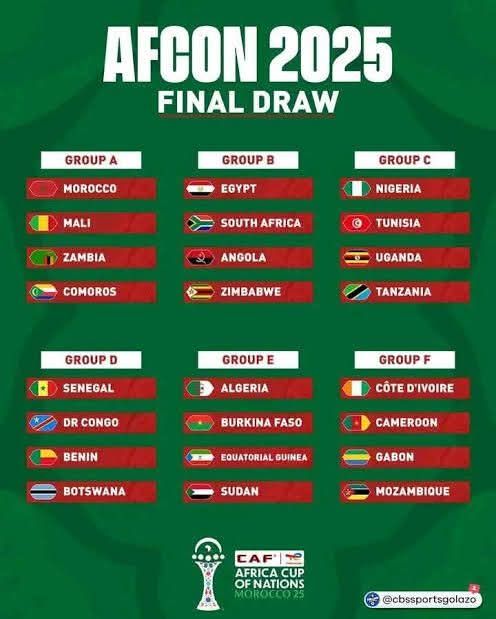
The group stage of the CAF Africa Cup of Nations (AFCON) Morocco 2025 has delivered a masterclass in footballing evolution. It wasn’t merely a series of matches to determine qualifiers; it was a vivid, 24-game tableau showcasing the delicate, dynamic balance at the heart of African football. On one side, the continent’s established icons, their legacies secure, continue to bend tournaments to their will. On the other, a hungry, technically gifted new wave is forcefully announcing its arrival. This tension between proven greatness and emerging ambition is the defining story of the tournament’s opening act, setting a thrilling stage for the knockout drama to come.
By Victor Okoye, News Agency of Nigeria (NAN)
The sheer volume of goals—87 before the knockouts—speaks to an attacking verve, but the *nature* of those goals tells the deeper story. The “Old Guard,” a cohort of former African Footballers of the Year, demonstrated that their value transcends mere statistics. They provide what money cannot buy: big-game temperament, leadership in pressurized moments, and an almost preternatural ability to decide matches when it matters most.
Consider the nuanced roles they played. For Senegal, Sadio Mané (African Footballer of the Year 2019, 2022) was more than a goal-scorer; he was the tactical and spiritual fulcrum. His movement and decision-making created space for teammates like Nicolas Jackson to flourish, a classic example of a superstar elevating those around him. Algeria’s Riyad Mahrez (2016) didn’t just score three goals; he orchestrated play, dropping deep to collect the ball and dictating the tempo with a veteran’s poise, reminding everyone that class is permanent.
Meanwhile, Egypt’s Mohamed Salah (2017, 2018) carried the burden of national expectation on his shoulders, delivering two crucial, pressure-laden goals that were pure products of his relentless efficiency. Even in Gabon’s disappointing campaign, Pierre-Emerick Aubameyang’s (2015) predatory instinct flashed, a reminder of his enduring quality. The return of Achraf Hakimi (2025) for hosts Morocco provided an immediate upgrade in both defensive solidity and attacking width, showcasing how a single world-class player can transform a team’s tactical profile.
Yet, the group stage was equally significant for the authoritative statement made by the continent’s next generation. This isn’t just about potential anymore; it’s about immediate, high-stakes production. These rising stars aren’t waiting for permission to lead.
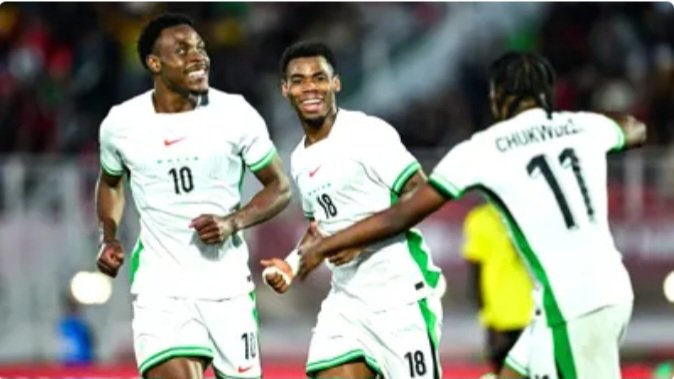
Nigeria’s charge was brilliantly spearheaded by the current African Footballer of the Year, Ademola Lookman (2024). His two goals and two assists, particularly his complete, match-winning performance against Tunisia, displayed a player at the peak of his powers, seamlessly blending individual flair with team responsibility. Alongside him, Victor Osimhen (2023) used his iconic relentless energy to not only score but to destabilize defenses, creating opportunities through sheer force of will.
Beyond the reigning champions, other nations found their spark in youth. Côte d’Ivoire’s Amad Diallo provided the incisive edge they sometimes lacked, with his winner against Mozambique being a moment of cold-blooded composure that defined their progression. Cameroon’s Bryan Mbeumo emerged as their most consistent attacking threat, his intelligent movement and clinical finishing offering a new dimension. Perhaps most tellingly, the engine room of Nigeria’s midfield was quietly controlled by Raphael Onyedika, whose ability to break up play, dictate tempo, and initiate transitions is the unglamorous but essential foundation upon which star attackers thrive.
As we look ahead, the knockout rounds present the ultimate test of this generational dynamic. The question is no longer *if* the new stars can play, but *how* they will perform under the single-elimination pressure where one mistake ends a dream. Will the experience and big-match nerves of Mané, Salah, and Mahrez prove decisive in the quarter-finals or semi-finals? Or will the fearless energy and technical brilliance of Diallo, Mbeumo, and Lookman overwhelm established orders?
This clash of eras does more than decide a trophy; it is a live audition for the future. The player who shines brightest in the coming weeks—whether from the old guard or the new wave—will not only lift his nation but will also seize the inside track to be crowned Africa’s next Footballer of the Year, symbolically marking the passage of the continent’s footballing crown. (NANFeatures)
***If used, please credit the writer and the News Agency of Nigeria.